
7 Easy Science Experiments that Feel Like Magic: STEM Fun
Science is all around us—bubbling in the kitchen, sparkling in the backyard, and swirling in the bathtub. And when it’s presented with a splash of fun and a sprinkle of wonder, it can feel just like magic. For kids, these hands-on experiments are more than just play—they’re foundational steps into the world of STEM (Science, Technology, Engineering, and Math).
Here are science experiments you can do at home that will make your little scientists’ eyes light up with excitement while secretly building their STEM skills.
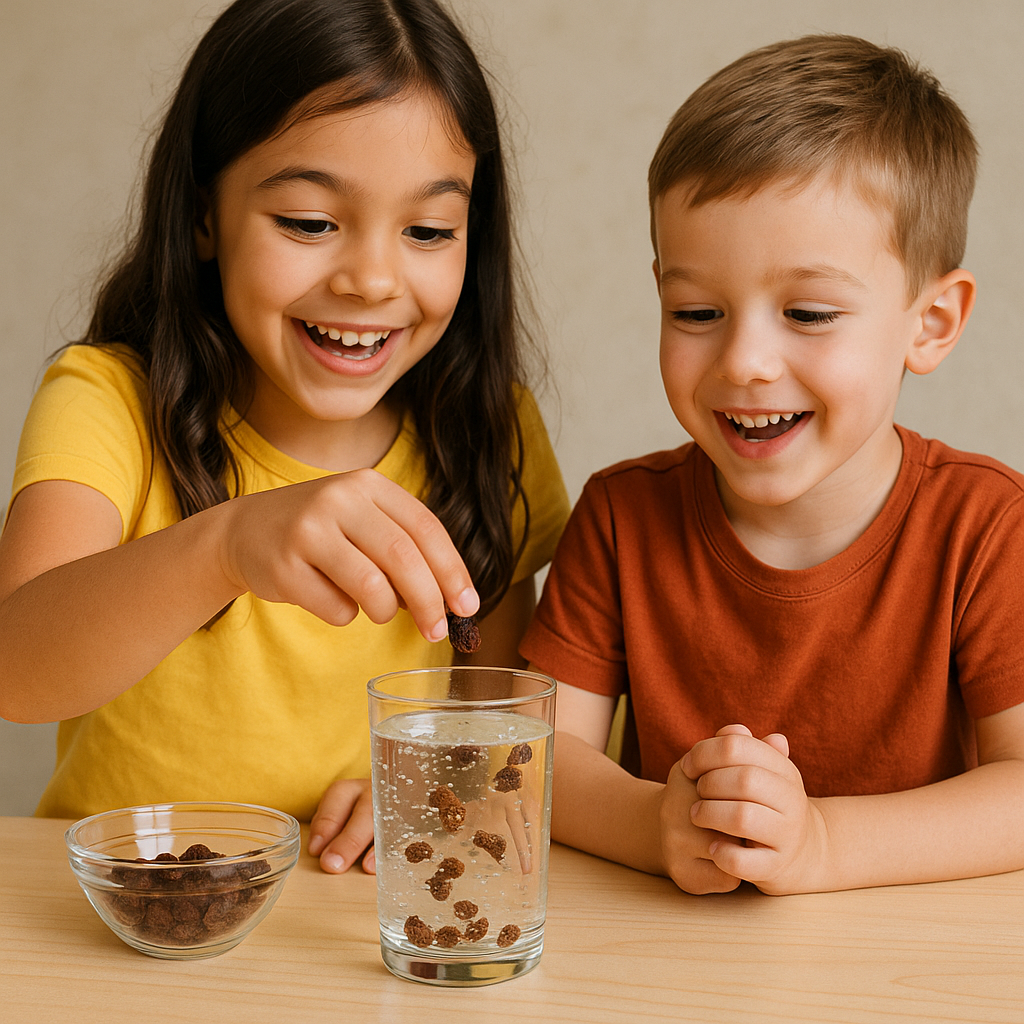
The Dancing Raisins
What You’ll Need:
- Clear soda (like Sprite or 7-Up)
- A glass
- A few raisins
What to Do:
Pour the soda into a glass, then add a few raisins. Watch what happens—within seconds, the raisins will begin to float up and down, like they’re dancing!
The Science Behind It:
The carbonation in the soda creates tiny bubbles of carbon dioxide gas. The bubbles cling to the rough surface of the raisins, making them buoyant enough to float upward. Once the bubbles burst at the surface, the raisins sink back down.
Magic Milk Explosion
What You’ll Need:
- Whole milk
- A shallow dish
- Food coloring
- Dish soap
- Cotton swabs
What to Do:
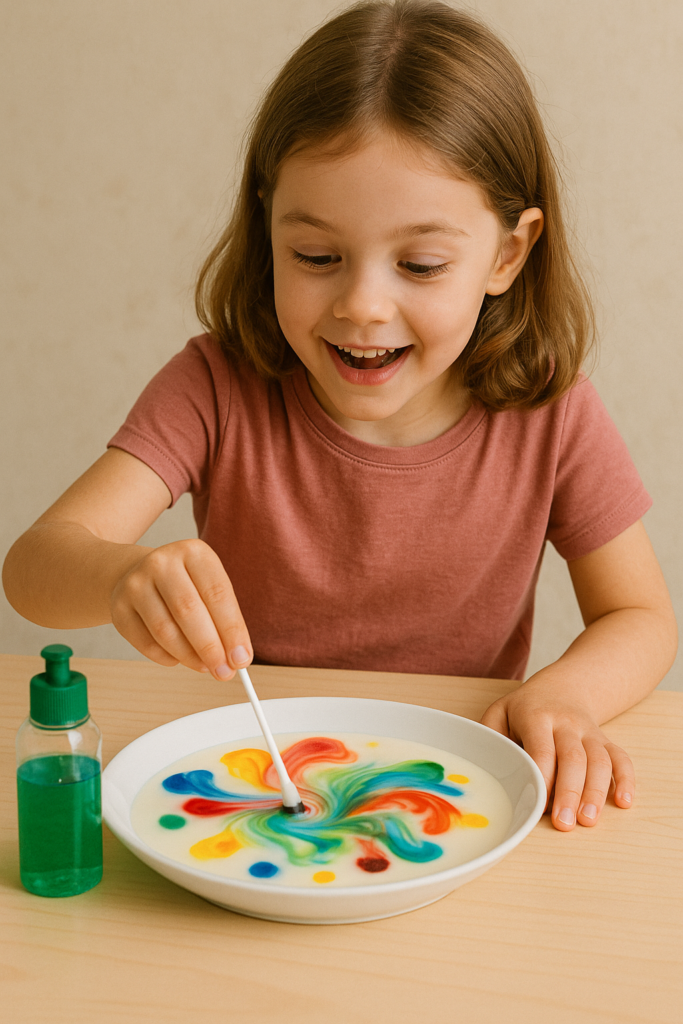
Pour milk into a dish, add drops of food coloring (using separate colors works best), then dip a cotton swab in dish soap and lightly touch it to the surface of the milk. Watch the colors burst and swirl like magic!
The Science Behind It:
Milk is full of fats and proteins. The soap lowers the surface tension and interacts with the fat molecules, causing the colors to swirl and blend into striking patterns. This experiment is a fun intro to chemical reactions and surface tension.
Balloon-Powered Car
What You’ll Need:
- A balloon
- A plastic bottle or cardboard
- Straws
- Bottle caps or similar wheels
- Tape and scissors
What to Do:
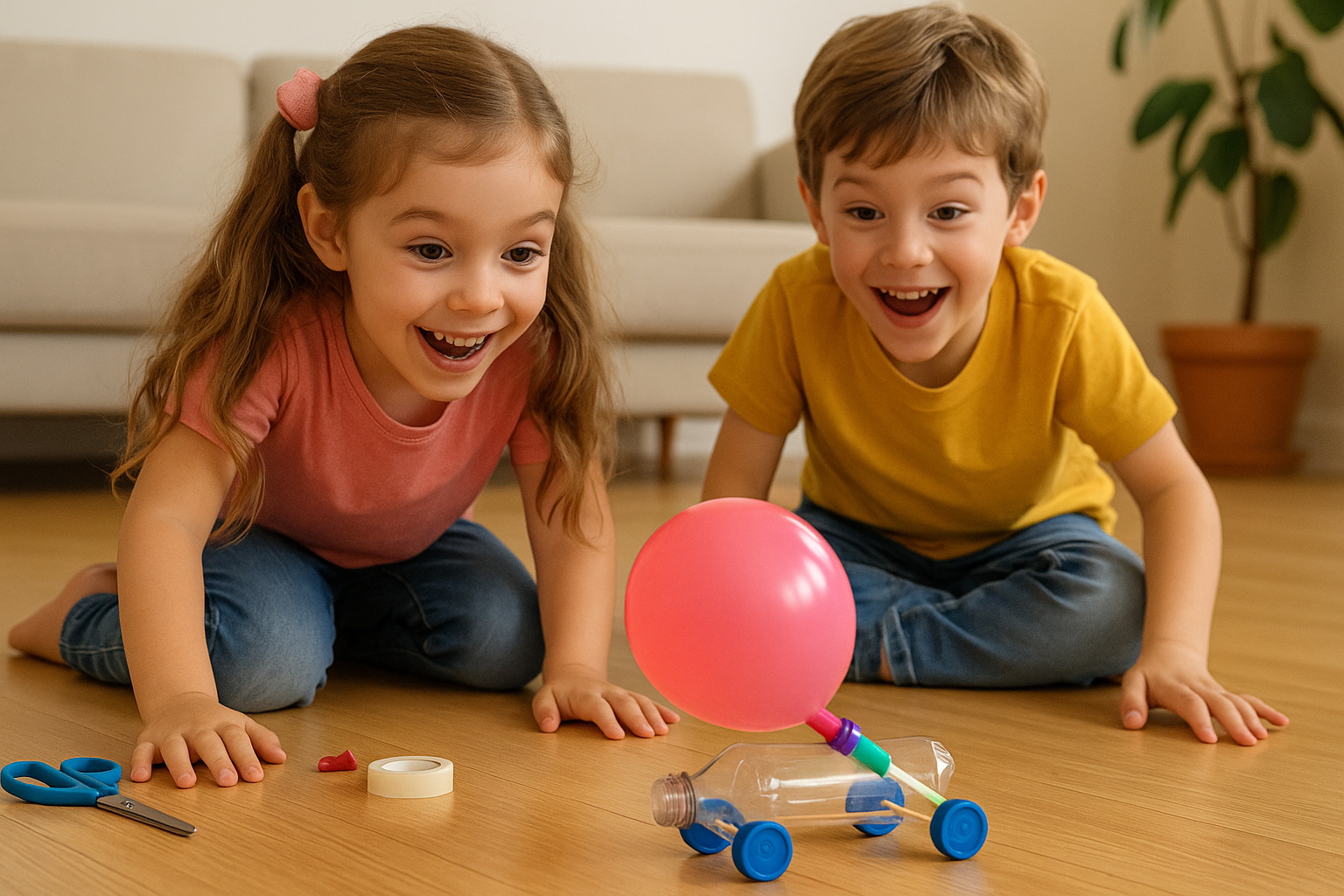
Build a simple car with the bottle or cardboard as a base, bottle caps as wheels, and a straw as the exhaust. Tape the balloon to the straw, blow it up, and let it go. The car zips forward like it’s powered by rocket fuel!
The Science Behind It:
This is a great intro to Newton’s Third Law of Motion—for every action, there’s an equal and opposite reaction. The escaping air pushes the car forward, showing kids how thrust works in real-world engineering.
The Invisible Ink Mystery
What You’ll Need:
- Lemon juice
- Cotton swabs
- White paper
- A heat source (like a lamp or iron)
What to Do:
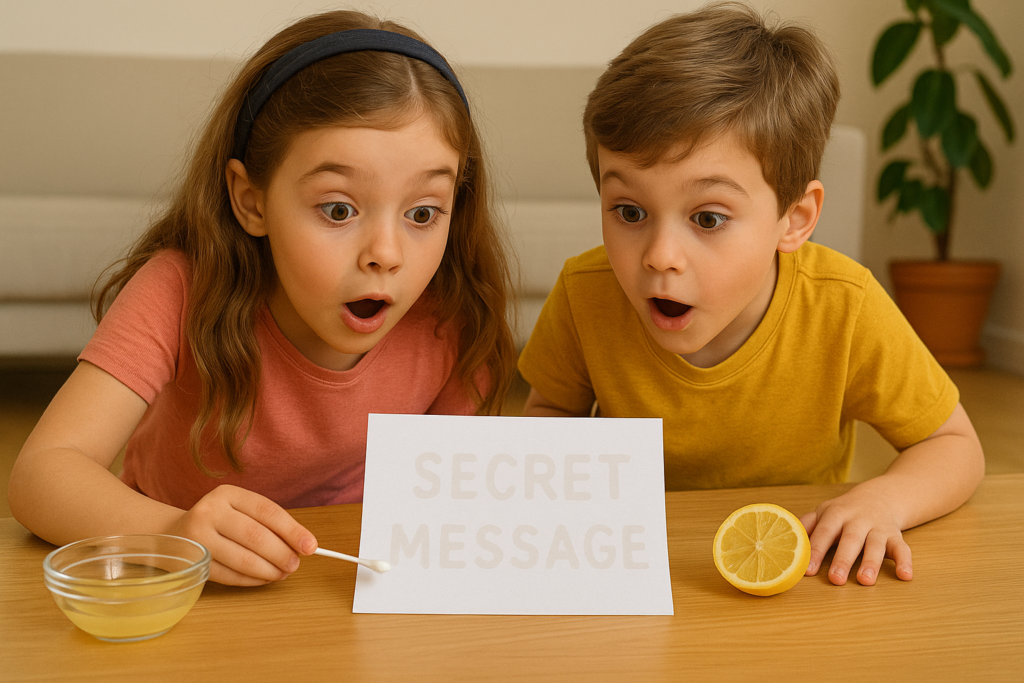
Use the cotton swab dipped in lemon juice to write a secret message. Let it dry completely. Then, hold the paper close (but not too close!) to a warm lamp or gently iron it under adult supervision. The hidden message appears!
The Science Behind It:
Lemon juice is an organic compound that oxidizes and turns brown when exposed to heat. This simple chemical reaction mimics old-school spy techniques and gets kids curious about chemistry and history!
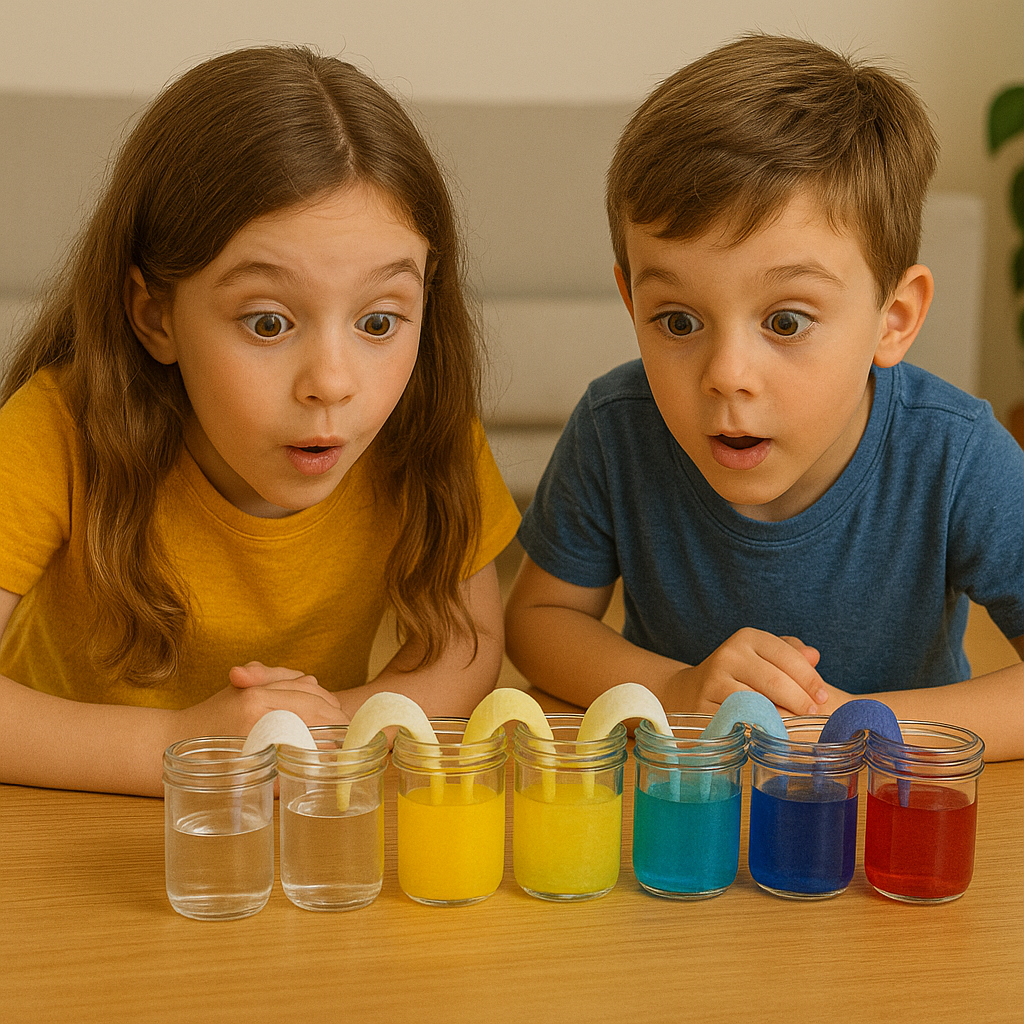
Walking Water Rainbow
What You’ll Need:
- 6 cups
- Paper towels
- Food coloring
- Water
What to Do:
Line up the cups and fill every other cup with water. Add food coloring to the filled ones (red, yellow, and blue). Fold the paper towels and position them like bridges connecting each cup. Wait and watch—colors will climb and mix into a beautiful rainbow.
The Science Behind It:
This experiment demonstrates capillary action—the same force that helps water move through plants. Kids get a firsthand look at how liquids can travel, mix, and change before their eyes.
Bouncing Egg
What You’ll Need:
- An egg
- A jar or glass
- White vinegar
What to Do:
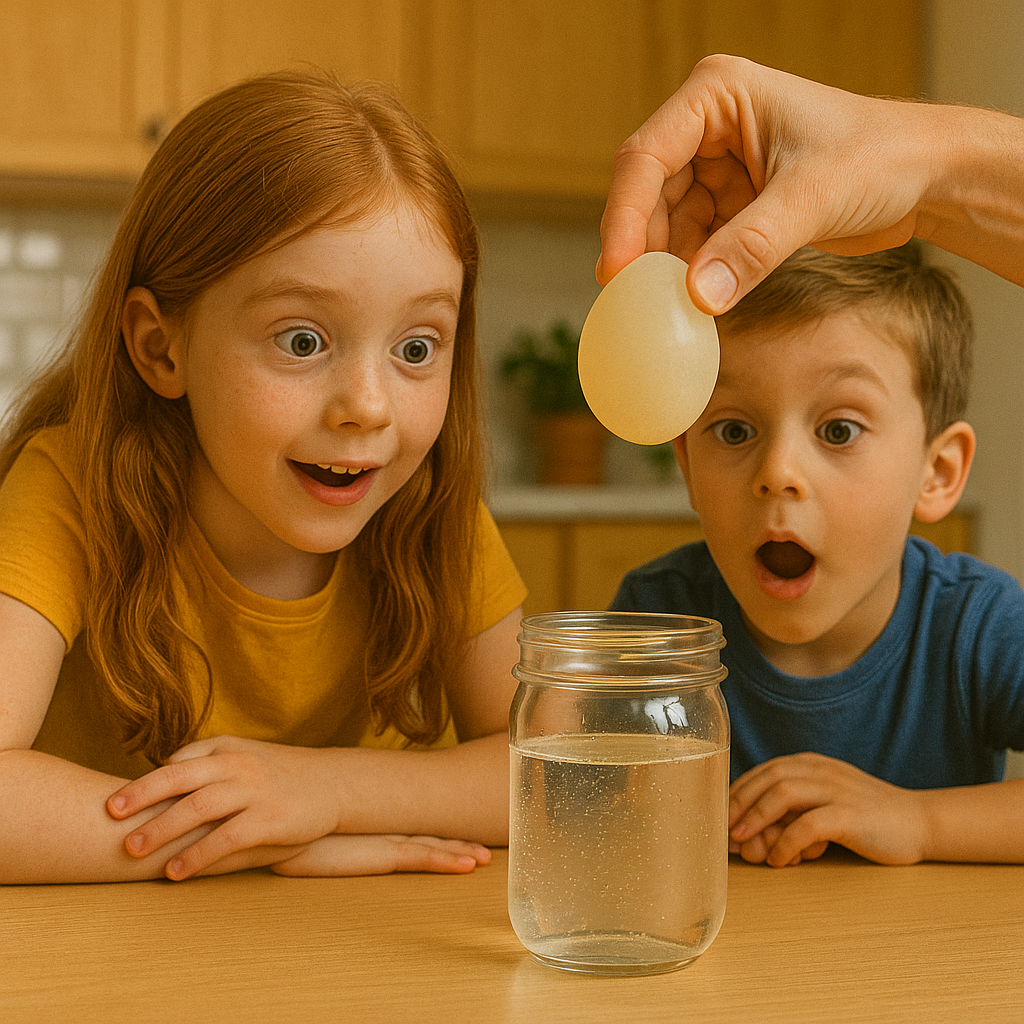
Place the egg in the jar and add vinegar. Let it sit for 24–48 hours. The shell will dissolve, and you’ll be left with a rubbery, bouncy egg!
The Science Behind It:
Vinegar contains acetic acid, and eggshells are made of calcium carbonate. The reaction between the two releases carbon dioxide (you’ll see bubbles!) and dissolves the shell, leaving behind the membrane. It’s an awesome example of acid-base reactions and a cool sensory activity, too.
Rainbow in a Jar
What You’ll Need:
- A tall clear glass or jar
- Water
- Sugar
- Food coloring
- Spoons
What to Do:
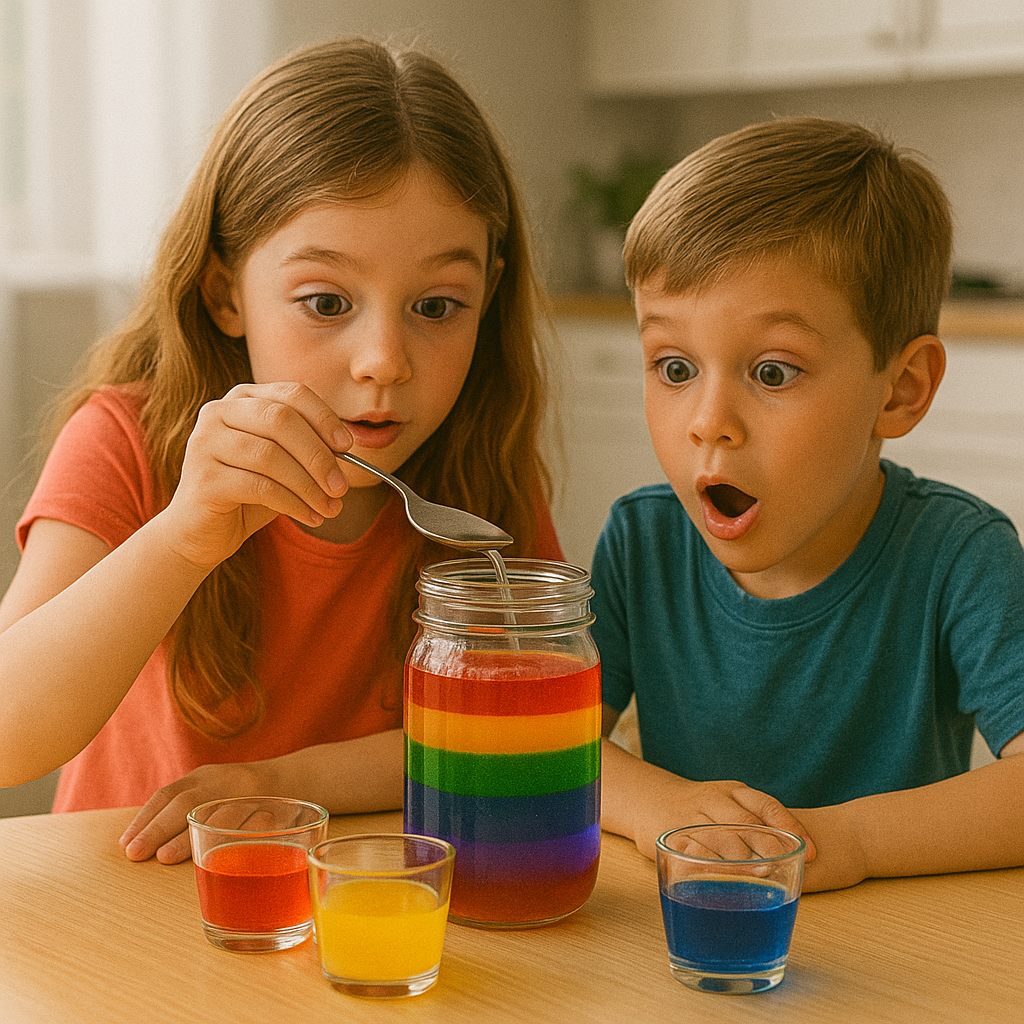
Mix sugar with water in separate cups—each with a different amount of sugar (1 tbsp, 2 tbsp, etc.). Add a different food color to each. Carefully layer the densest (most sugar) liquid on the bottom, and the least dense on top using a spoon to pour slowly.
The Science Behind It:
Different sugar concentrations create different densities. The heavier layers sink, and the lighter ones float. The result? A stacking rainbow that combines elements of beauty and science.
Why STEM + Play = The Perfect Combination
STEM learning isn’t just about memorizing facts. It’s about asking “What if?”, getting your hands dirty, and making connections between what you see and what you know. These experiments spark curiosity and give kids:
- Critical thinking skills
- Hands-on problem-solving
- A foundation in scientific thinking
- A sense of accomplishment when they discover something new
And when it’s wrapped up in fun and magic? It becomes unforgettable.
Tips for Parents & Educators
- Pose open-ended questions such as, “What do you think will happen?” or “Why do you think that happened?”
- Encourage messy play—it’s where a lot of learning lives.
- Use everyday language; don’t worry about complex terms unless the child is ready.
Make it a routine—“Science Sunday” or “Wonder Wednesday” can become a highlight of the week.
Final Thoughts
Whether you’re a parent trying to jazz up rainy afternoons or a teacher bringing more hands-on learning into the classroom, simple science experiments like these bring STEM to life. They bridge the gap between play and education, turning kitchens and classrooms into wonder labs.
So the next time your child is bored or curious, pull out some vinegar, milk, or raisins—and let the magic of science do its thing.
Want more science fun? Do write us for more exciting STEM activities, craft ideas, and play-based learning tips! 🧪✨